How to Paint 3D Printed Resin Miniatures: From Wash to Highlight (Beginner Guide)
A step-by-step painting guide built specifically for 3D printed resin miniatures — covering surface prep, primer, basecoat, wash, and highlight for beginners.
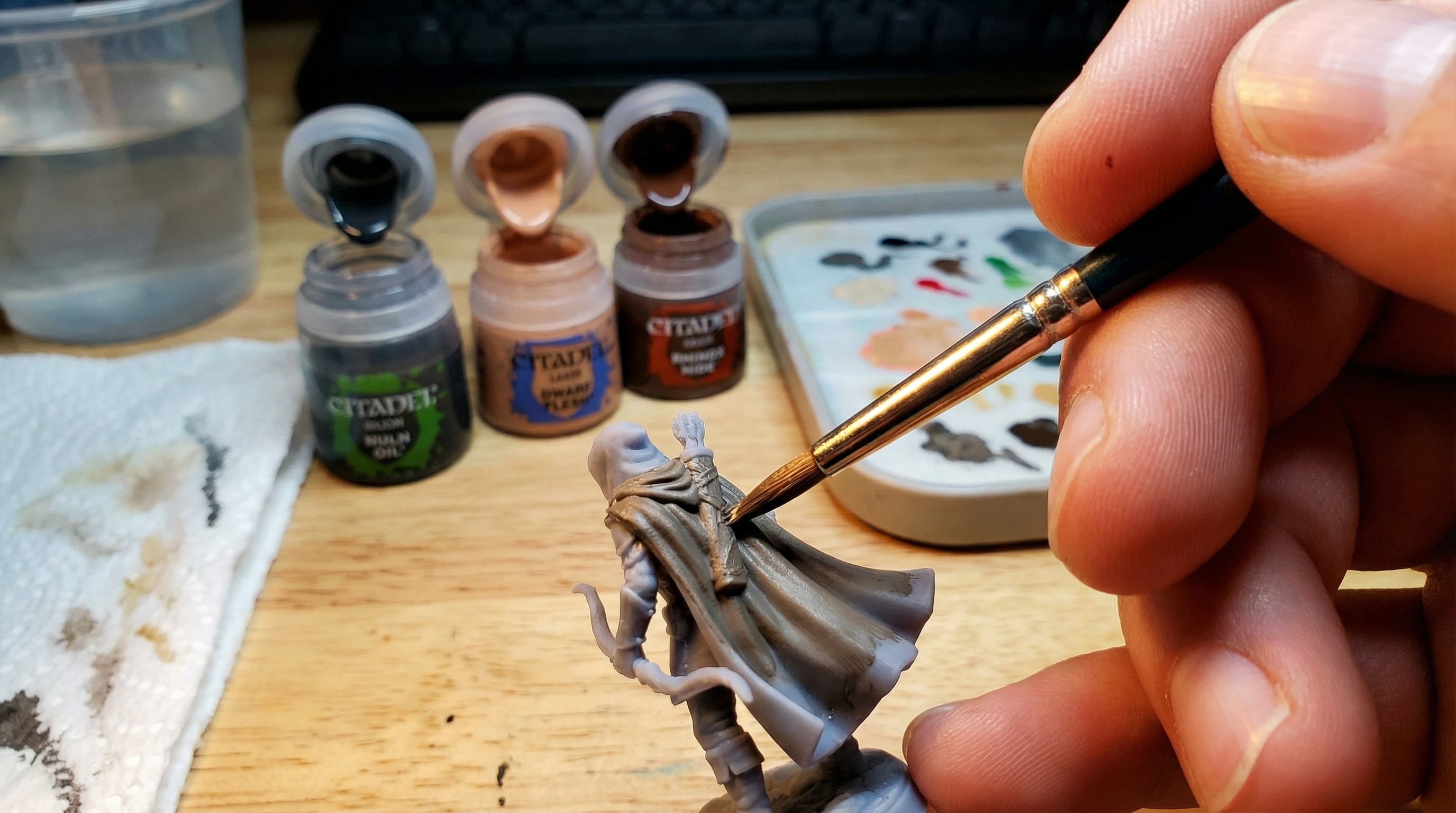
Painting is where the miniature becomes yours.
The printing process gets you a technically excellent model. Painting is where you decide it’s a battle-hardened ranger who favors dark leathers, or a naive paladin still wearing polished armor that hasn’t seen a real fight. That decision process is most of the fun.
This guide is built specifically for 3D printed resin miniatures, which have some important differences from cast metal or injection-molded plastic. The surface behaves differently. The prep steps are slightly different. The things that go wrong are different. If you’ve painted cast minis before, some of this will be familiar and some won’t. If you’re starting from zero, everything you need is here.
For minis to practice on, the best STL sites guide has options at every price point — including plenty of free files on Printables that are good practice material before you commit to your prized models.
What Makes Printed Resin Different from Cast Minis
Before the technique breakdown, a brief note on why printed resin has its own quirks:
Surface smoothness varies by printer and settings. A well-dialed 12K or 16K printer produces a surface smoother than most cast plastic. This is mostly good, but it means drybrushing behaves differently — there’s less tooth for the dry brush to catch.
Layer lines may be visible. At 0.05mm layer height, Z-axis layer lines are usually subtle enough to paint over without issue. At 0.1mm (never do this for minis), they’re a real problem. If your layer lines are visible after priming, the fix is either re-print at finer layers or wet-sand lightly before priming.
Support scars are your enemy before painting. Anywhere a support tip touched the model, there’s a small mark — sometimes a crater, sometimes a raised nub. Clean these up before priming. See how to remove support marks from resin miniatures for the full cleanup process.
Resin needs primer more than cast plastic does. Paint applied directly to cured resin chips easily. Primer is not optional — it’s the step that makes everything else work.
What You Need
Paints:
- 2–4 basecoat colors (large flat paints: blacks, browns, mid-tones)
- 1–2 wash/shade paints (Citadel Nuln Oil, Army Painter Dark Tone, Vallejo Smoke)
- 2–3 highlight colors (lighter versions of your basecoats, or add white to mix)
Tools:
- Brushes: one basecoat brush (size 2 or 3), one detail brush (size 0 or 000), one wash brush (size 2 or larger)
- Palette (wet palette or ceramic tile)
- Small water cup
- Paper towels
For prep:
- Miniature primer (spray or brush-on — see section below)
- Flush cutters and needle files for support cleanup
For finishing:
- Matte varnish (Vallejo Matte Varnish, Testors Dullcote)
If you’re looking at brush options and not sure where to start, Army Painter and Citadel both make starter sets. The models you practice on will teach you which brush sizes you actually use.
Step 1: Surface Prep
Before primer touches the model, the surface needs to be clean and free of support artifacts.
Check for support marks. Run your finger gently over the model surface. You’re feeling for raised nubs (support still attached) or craters (support pulled a small chunk). Nubs clip off with flush cutters; smooth them with a needle file. Craters may need filling with a dot of liquid green stuff or putty, let dry, sand smooth.
Wash the model. Soak in soapy water (a few drops of dish soap in warm water) for 5–10 minutes. This removes any mold release residue and leftover IPA from the wash step that didn’t evaporate fully. Rinse clean and let dry completely. This step is often skipped and it matters — primer adheres better to a clean surface.
Inspect under a bright light. Hold the model under a bright lamp and rotate it slowly. Look for any missed support marks, any surface bubbles from the print, and any areas where the layer lines are more prominent than you’d like. Fix what you can before priming.
Step 2: Primer
Primer is the most important step in the painting process. Get it wrong and everything else fights you.
Primer Options
Spray primer is fastest and most even on complex geometry. Good options:
- Tamiya Fine Surface Primer (grey or white) — excellent adhesion, very thin, doesn’t fill detail
- Vallejo Surface Primer in a spray can — same quality as their bottle primer in aerosol form
- Citadel Chaos Black spray — reliable, widely available, matte black base for dark models
Brush-on primer gives more control and is better for small batches or when you can’t spray outside. Stynylrez (Badger) and Vallejo Surface Primer in a bottle are the standards. Thin slightly with water, apply in thin even coats.
Avoid: Cheap hardware store primers. They’re thick, fill in fine detail, and don’t adhere to resin reliably.
Application
Apply primer in a thin, even coat. You want coverage without filling in the detail. Common mistakes:
- Too thick (usually from too close with a spray can, or too little thinning with brush-on) — fills in recesses and fine detail, softens the model’s crispness
- Incomplete coverage — paint chips from unprimed areas
Let primer fully cure before proceeding. For spray primer, 30–60 minutes in normal conditions. For brush-on primer, at least 2 hours.
Color of primer:
- Black primer — Natural shading because recesses stay dark. Good for dark-themed models, armored figures, anything where the shadows should be deep. Harder to paint bright colors over.
- Grey primer — Neutral base, easiest to work from, shows detail well. Best starting choice.
- White primer — Best under bright colors (yellows, reds, light skin tones). Less forgiving — every paint application is visible.
Most beginners do well starting with grey or black, depending on the model’s intended palette.
Step 3: Basecoat
The basecoat establishes the primary colors of the model. You’re not adding shading or highlights yet — just blocking in flat color.
Consistency: Paints should be the consistency of whole milk. Too thick and they’re gummy and fill recesses. Too thin and they don’t cover. Add a drop of water at a time to thin.
Work in sections. Don’t try to basecoat everything in one go. Pick an area — the cloak, the armor, the skin — and complete that section before moving on. This prevents accidental bleed between areas.
Two thin coats, not one thick one. This applies to almost everything in miniature painting. Two thin coats gives better coverage than one thick coat and leaves the model’s surface texture intact.
Color choices: Keep it simple to start. A dark basecoat (deep brown, dark grey, dark green) will look better than a complicated scheme you abandon halfway through. You can always add more colors on your next model.
Step 4: Washing (Where the Magic Happens)
A wash — also called a shade — is a thin, low-viscosity paint that flows into recesses and deepens shadows automatically. It’s the technique that makes a beginner’s miniature look like it was shaded with skill.
How it works: The wash flows into the lowest points of the model’s surface, pools in recesses, and leaves the raised areas relatively clear. When it dries, you have automatic shading in all the right places.
The main options:
- Citadel Nuln Oil — Black/grey wash. Works on almost everything. The standard for metal, dark armor, anything shadowed.
- Citadel Agrax Earthshade — Brown wash. Excellent for skin, leather, wood, earthy tones. Warmer than Nuln Oil.
- Army Painter Dark Tone — Similar to Nuln Oil; slightly thicker. Widely available.
- Vallejo Smoke — Versatile dark wash; slightly transparent.
Application: Load a large brush (size 2 or bigger) and flow the wash over an entire section. You want it wet enough to flow into recesses on its own — don’t scrub it in. Let it settle.
Important: Keep the model still while the wash dries. If you hold it at an angle, the wash will pool asymmetrically.
Drying time: 30–60 minutes until fully dry. Don’t rush it — touching a damp wash spreads it where you don’t want it.
After washing, your model will look a bit dingy and dark all over. That’s correct. The next step fixes it.
Step 5: Layering and Highlighting
Highlights restore the brightness to raised surfaces, creating the illusion of form and light.
Drybrushing (Fastest Method)
Drybrushing is a technique where you load a brush with paint, remove almost all of it on a paper towel, and lightly drag the near-dry brush across the model’s surface. The tiny amount of remaining paint catches on raised edges and textures, brightening them.
Result: Quick, effective highlighting that looks good on textured surfaces (fur, rough fabric, stone), less ideal on smooth surfaces (faces, polished armor).
How to:
- Load a flat or fan brush with your highlight color
- Wipe almost all the paint off on a paper towel — keep going until the strokes leave just a faint residue
- Lightly drag across the model in multiple directions
- Build up gradually — too much at once looks overdone
For printed resin specifically, drybrushing requires a slightly heavier hand than on cast models because the surface is smoother. The drybrushing guide for resin miniatures goes into more detail on adapting the technique.
Layering (More Precise Method)
Layering is applying progressively lighter paints in successively smaller areas, working from the basecoat up to bright highlights.
- First layer: Mix your basecoat with a little white or a lighter color. Apply to upper surfaces, leaving the shadowed areas untouched.
- Second layer: Mix lighter still. Apply to the most raised surfaces only — the tops of folds in cloth, the tips of hair, the crowns of armor plates.
- Edge highlight (optional): A very fine line of near-white or bright color on the very edges of hard surfaces (armor plates, buckles, weapon blades).
Layering takes more time than drybrushing but produces a smoother, more polished result on smooth surfaces.
Step 6: Details
With basecoats, washes, and highlights done on the major surfaces, detail work is about making specific elements pop.
Eyes: The most intimidating part. Tiny eyes on 28mm miniatures are hard. The cheat code: paint them black, then add a tiny dot of white on one side of each eye, then (if you want irises) a dot of color in the center. Don’t stress about perfection — eyes at arm’s length across a table are nearly invisible.
Metals: Drybrush with Citadel Leadbelcher or equivalent over a dark basecoat, wash with Nuln Oil, then edge highlight with a silver (Chainmail, Bright Silver) on prominent edges. Straightforward but effective.
Leather: Dark brown basecoat, Agrax Earthshade wash, drybrush with a lighter brown, optional dot highlights on strap edges.
Skin: Light brown or flesh basecoat, Reikland Fleshshade or Agrax wash, highlight with your basecoat color + white on cheekbones, nose, chin, and forehead.
Step 7: Basing
The base completes the miniature and places it in a world. Even a simple base treatment transforms how a model looks.
Texture paste method: Apply a layer of texture paste (Citadel Astrogranite, Army Painter texture paste) to the base, avoiding the model’s feet. Let dry. Drybrush lightly with a light grey or stone color. Done.
Sand and static grass: Cover the base with PVA glue, dip in fine sand or ballast, let dry. Paint the sand (dark brown base, drybrush lighter). Apply small patches of PVA and dip in static grass for natural-looking ground cover.
Custom printed bases: Many STL sites offer custom base designs — cobblestone streets, dungeon floors, grassy fields. If you have a printer, these are worth using. The best STL sites guide includes base STL resources.
The full basing guide is at how to base 3D printed miniatures.
Step 8: Varnishing
A varnish coat seals your paint job and protects it from wear. For models you’ll actually play with, this step is not optional — resin without varnish chips.
Matte varnish is standard for most miniatures. It kills any gloss from the washes and gives a natural finish. Vallejo Matte Varnish (brush-on) and Testors Dullcote (spray) are reliable.
Satin varnish works for leather, skin, and worn surfaces where a slight sheen is appropriate.
Gloss varnish is specifically for glass, gems, and eyes — not for the whole model.
Apply varnish in thin coats in non-humid conditions. Spray varnishes applied in humid weather (above 70% humidity) can cause “frosting” — a white cloudy film that’s very hard to fix. If you’re in a humid climate, brush-on varnish is safer.
See how to varnish and seal 3D printed resin miniatures for a more detailed breakdown including common mistakes.
Painting Workflow Summary
- Clean support marks, wash model in soapy water, dry completely
- Apply primer (grey recommended for beginners); let fully cure
- Basecoat all major areas in flat color (two thin coats)
- Apply wash/shade to each section; let fully dry
- Drybrush or layer highlights back onto raised surfaces
- Paint details (eyes, metals, leather)
- Base the miniature
- Varnish to protect
The entire process on a single 28mm character, working at a relaxed pace, takes 3–6 hours spread across one or two sessions. With practice and faster techniques, you’ll get that down significantly.
Contrast and Speed Paints (The Fast Route)
Contrast paints (Citadel) and their equivalents — Army Painter Speedpaint, Vallejo Xpress Color — are a one-coat approach that combines basecoat and shading in a single application. They flow into recesses and leave raised areas brighter automatically, similar to a wash but over white or light primer.
The honest assessment: contrast paints produce 70% of the result in 30% of the time. For hobbyists who want a painted table army faster than individual mini painting allows, they’re excellent. For showcase pieces, they’re a base to build on.
The full breakdown is in using contrast paints on 3D printed resin miniatures.
Frequently Asked Questions
Do I need to wash my miniature before priming? Yes, always. Soapy water wash removes residual IPA and mold release compounds. Primer adhesion on a clean surface is noticeably better.
Can I paint over a wash immediately or do I need to wait? Wait. A damp wash will reactivate when you paint over it, causing smearing. 30–60 minutes is typically enough; 2+ hours is safer if your room is humid.
My highlight looks stark and obvious. What did I do wrong? The paint was probably too opaque or applied too heavily. Highlights work best when they’re built up gradually in thin, semi-transparent layers. Try thinning your highlight color more (2:1 water to paint ratio) and applying multiple thin coats instead of one visible one.
How do I fix a paint mistake? On dry paint: water-activated mistakes can sometimes be lifted with a damp brush. Otherwise, reapply your basecoat color over the mistake and re-shade. Most mistakes are invisible after washing and highlighting.
Is an airbrush necessary? No. Everything in this guide is brush-applicable. An airbrush helps with smooth gradient work and priming large batches, but it’s a tool for an intermediate step up, not a beginner requirement. See best beginner airbrush for painting miniatures if you’re curious about the upgrade path.