This article contains affiliate links — if you buy through them, we may earn a commission at no extra cost to you.
You’ve got a printer. Now you need something to print.
STL files for tabletop miniatures exist across a surprisingly fragmented landscape — free repositories, individual marketplace purchases, monthly subscriptions from specific creators, and platforms that try to do all three at once. The quality gap between a random free file and a professionally designed, pre-supported subscription file is enormous. So is the price gap.
This guide lays out all the main options, what you actually get from each, and where your money goes furthest depending on what you’re printing for.
If you’re still picking a printer, start with the complete beginner’s guide first. The STL landscape makes a lot more sense once you understand pre-supported files and why they matter.
What “Pre-Supported” Actually Means (and Why You Should Care)
Before the platform breakdown, a quick clarification that affects every buying decision here.
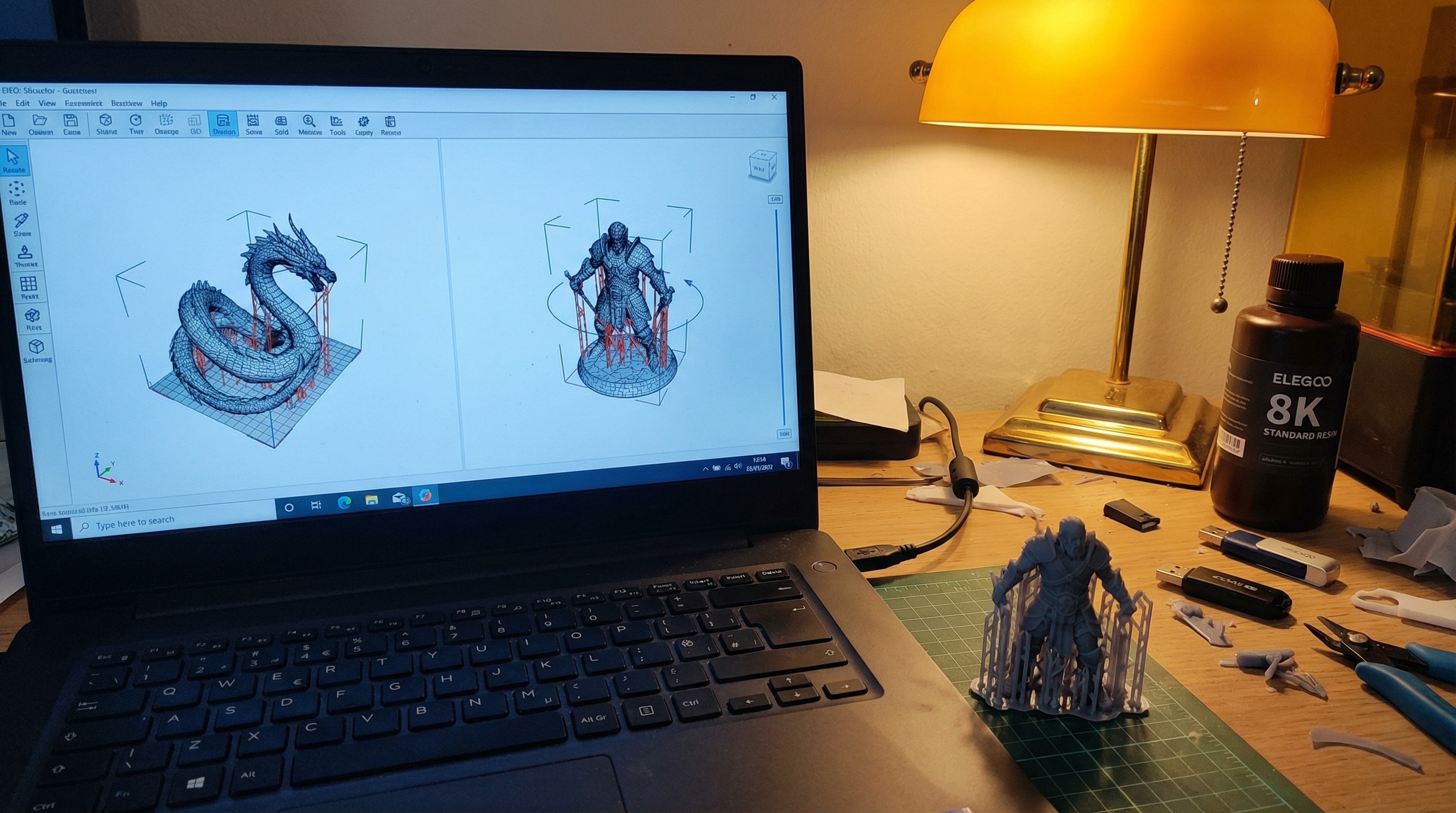
Pre-supported STL files come with supports already built into the model by the designer. You import them into your slicer, orient them, and print. No manual support work required.
Unsupported files require you to add supports yourself in Lychee or Chitubox. This takes time and skill, and a beginner doing it wrong will ruin otherwise good models.
Professional subscription services almost always include pre-supported files. Free repositories often don’t. This difference in practical usability is one of the main arguments for paid content — it’s not just about model quality, it’s about whether the file will print successfully on your first try.
The Main Platforms
MyMiniFactory — The Largest Dedicated Miniature Marketplace
MyMiniFactory is the closest thing to an industry-standard destination for miniature STLs. It’s been around since 2013 and has accumulated a library in the tens of thousands of files from independent designers worldwide.
Two ways to buy:
-
Individual purchases — Buy files a la carte. Prices range from $3–$15 per model or pack. Good for specific one-off purchases when you know exactly what you need.
-
Tribes subscriptions — Monthly subscription programs run by individual creators on the MyMiniFactory platform. You pay $10–$15/month to a specific creator and get that month’s full release drop (usually 10–30+ models, often themed to a faction or setting). The affiliate upside for the platform comes here — top creators like Artisan Guild, Titan Forge, CobraMode, and Archvillain Games all run Tribes programs.
What’s good: Consistently high-quality designer community, strong pre-supported file standards from top creators, good print-readiness. The platform vets creators to some degree.
What’s not: Finding quality through the noise takes effort — the library is huge and inconsistent. Some files listed as “printable” require significant slicer work.
Best for: Players who know which creators they like, or anyone wanting to subscribe to a specific faction or aesthetic for a monthly model drop.
Patreon — Creator-Direct Model Drops
A lot of the best miniature designers run their own Patreon pages and release files directly to subscribers. You subscribe to a creator, you get their monthly releases. Simple.
The structural difference from MyMiniFactory Tribes is that Patreon is creator-owned — the creator keeps a larger percentage of revenue, and you’re often getting releases that feel more personal and curated (because they are). Many designers offer their Patreon at similar pricing to their Tribes subscription and release on both platforms simultaneously. Some are Patreon-exclusive.
What’s good: Direct relationship with designers. First access to releases. Community Discord access is often included. Some creators include Kickstarter backerkit exclusives in Patreon tiers.
What’s not: Discovery is harder — Patreon’s search isn’t great for finding miniature designers if you don’t already know who to look for. Payment is in USD/local currency and Patreon takes their cut, which affects what creators can offer per tier.
Best for: Fans of specific designers who want to support them directly and stay in the community.
Printables — The Best Free Repository
Printables is run by Prusa and has become the strongest free STL repository for miniatures, displacing Thingiverse as the go-to free source. It’s more curated, less spammy, and the community vetting through likes and downloads gives you a reasonable signal on quality.
You won’t find the professional quality of Tribes subscriptions here, but Printables has genuinely excellent free files — particularly for terrain, scatter pieces, and utility items (base inserts, storage boxes, dungeon tiles). Character models vary widely.
What’s good: Free. Large library. Better moderation than Thingiverse. Good for terrain.
What’s not: Most files are unsupported, which means you’re doing the slicer work yourself. Character model quality is inconsistent.
Best for: Terrain, scatter pieces, utility prints, and exploration before committing to a subscription.
Thingiverse — The Old Guard
Thingiverse was the original go-to for free 3D printing files and still has a massive library. The problem is the platform maintenance has been inconsistent over the years under MakerBot/Stratasys ownership, and the curation is effectively nonexistent. You can find good files, but you’re fishing through a lot of noise.
Still worth a bookmark for one specific reason: niche requests. If you need a very specific thing — a specific vehicle prop, a historical-style architecture piece, a miniature of an obscure creature — Thingiverse’s age and breadth means it might be there when nothing else is.
Best for: Niche file hunting. Otherwise, Printables has surpassed it.
Cults3D — Growing Alternative to MyMiniFactory
Cults3D is a French-based marketplace that’s been growing steadily as an alternative to MyMiniFactory for individual file purchases. The library is smaller but the designer community is active, and pricing is similar. Some designers who started on MyMiniFactory have migrated to or added Cults3D as a second storefront.
Subscription programs similar to Tribes exist on Cults3D but are less established and less populated than the MyMiniFactory ecosystem. For individual purchases, it’s a legitimate alternative. For subscriptions, MyMiniFactory is still dominant.
Best for: Individual file purchases; price comparison shopping against MyMiniFactory.
Kickstarter / Backerkit — One-Time Mega Drops
Several top miniature designers run annual Kickstarters or Backerkit campaigns releasing enormous content drops (100–400+ models) for a one-time pledge. These campaigns routinely fund in the tens of thousands of dollars and deliver commercial-quality content.
The tradeoff is timing — you commit money during the campaign and wait months for delivery. But when a top creator’s Kickstarter lands, you can be stocked with content for a year.
Best for: Players who want deep single-faction content and don’t mind waiting.
Subscription Value: The Math
Here’s the honest cost-per-model math on Tribes subscriptions at the typical price and release rate:
| Tier | Monthly Cost | Typical Release Volume | Cost Per Model |
|---|---|---|---|
| Standard | $10–$12 | 15–20 models | $0.50–$0.80 |
| Premium | $14–$16 | 25–35 models | $0.40–$0.64 |
| Individual purchase (MyMiniFactory) | $5–$10 | 1 model | $5–$10 |
| Retail plastic mini | $5–$20 | 1 model | $5–$20 |
The math on subscriptions is compelling when you actually print everything in a drop. The variable is whether a specific creator’s aesthetic matches what you need. Subscribing to a sci-fi creator when you run fantasy campaigns burns money.
Recommended Starting Points by Use Case
Running a DnD campaign and need variety: Start with one Tribes subscription from a fantasy generalist (Artisan Guild or Archvillain Games) plus Printables for terrain and scatter. This combination covers most encounter needs.
Collecting and painting specific factions: Find the creator who makes that faction and go Patreon-direct. This is a different relationship than grab-bag subscriptions — it’s more like supporting an artist whose work you specifically want.
Just getting started, not sure yet: Printables for free files while you learn your printer. Buy individual files from MyMiniFactory for specific prints you want to execute well. Once you know what direction your hobby is going, subscriptions make more sense.
DM printing full encounter sets: Multiple subscriptions or a mix of subscriptions and Kickstarter pledges. Artisan Guild covers heroic fantasy; Titan Forge does both fantasy and sci-fi; Archvillain Games does villain-focused content with excellent monster designs.
Notes on Quality Signals
When evaluating any file before purchase or printing:
- Pre-supported vs. unsupported — critical for beginners; check the product listing carefully
- Print photos vs. render photos — renders look perfect; actual print photos tell you how the file performs
- Download count and review quality — high download count with detailed positive reviews is the strongest quality signal on free platforms
- Designer track record — if a creator has 50 releases, all with positive community feedback, their new work is probably good
For the deeper comparison between MyMiniFactory Tribes and Patreon specifically, including pricing flexibility and cancellation policies, see MyMiniFactory vs. Patreon for Miniature STLs.
Frequently Asked Questions
Are STL files legal to print? Personal printing from purchased or freely distributed STL files is legal in most jurisdictions. Selling printed copies of purchased files is a different matter — read the license on any file you buy. Most commercial licenses prohibit selling physical prints.
What about GW/Warhammer designs? Games Workshop has been aggressive about IP enforcement. Files that are direct copies of GW models exist in gray areas. “Inspired by” and “compatible with” files from independent designers are legal and are what professional Tribes creators produce. Best Warhammer-adjacent content comes from creators like Titan Forge and Archvillain Games, who design original models in compatible scales with similar aesthetics.
Can I share STL files I’ve purchased? Check the license. Most commercial STL licenses are single-user and prohibit redistribution, including sharing with friends.
Do I need special software to open STL files? Your slicer (Lychee or Chitubox) opens STL files directly. No separate software needed. The beginner’s guide covers the full workflow from file to finished print.
How many STL files do I realistically print per month? This varies enormously. Casual printers running a few sessions per month might use 10–20 files. Heavy users printing full encounter sets weekly can burn through 50+. Start conservative on subscriptions — you can always upgrade once you know your print volume.