This article contains affiliate links — if you buy through them, we may earn a commission at no extra cost to you.
Most resin buying guides optimize for one thing: detail. And detail matters — you’re printing miniatures, not doorstops. But tabletop miniatures have an unusual requirement that display figures and figurines don’t: they get picked up, dropped, fumbled across a table, thrown in a dice bag, and occasionally launched off a shelf by a cat.
Standard resin, optimized purely for detail, is brittle. A thin sword tip will snap off. A delicate wing will crack. A miniature printed in pure standard resin and then actually used at the table is a repair project waiting to happen.
The resin selection question for miniatures isn’t just “which gives me the best detail?” It’s “which gives me acceptable detail while surviving actual use?” That’s a different question, and most resin guides don’t answer it.
This guide does.
For context on the full printing workflow — where resin fits into setup, washing, and curing — see the complete beginner’s guide to 3D printing resin miniatures.
The Three Categories You Actually Need to Know
ABS-Like Resin
ABS-like resin is engineered to mimic ABS plastic’s toughness and slight flexibility while maintaining the surface resolution MSLA printing provides. It doesn’t match pure standard resin on maximum detail at the finest level, but the difference at 28–32mm scale is minimal in practice.
What you get:
- Better impact resistance (the dropped mini problem)
- Reduced brittleness in thin features (sword tips, spear shafts, antenna)
- Slight flexibility that prevents catastrophic cracking
- Good surface detail, slightly more forgiving of exposure variance than standard resin
This is the correct resin for tabletop miniatures that will be played with. Full stop.
The slightly higher price per liter compared to basic standard resin is worth it when you’re not repairing minis after every third session.
Standard Resin
Standard MSLA resin (the generic grey or clear bottles from most manufacturers) is optimized for maximum detail resolution and surface quality. It’s what sculptors and display painters use.
For tabletop gaming, standard resin is best reserved for:
- Display pieces that will live in a case and never be touched
- Large terrain pieces that aren’t picked up during play
- Models you print at a finer layer height specifically to showcase detail
For anything that gets handled, standard resin’s brittleness is a real problem. The thin parts snap cleanly. The impact fractures are frustrating.
Water-Washable Resin
Water-washable resin is formulated to clean up with water instead of isopropyl alcohol. The appeal is obvious: no IPA, no fumes from the wash process, less chemistry to manage.
The trade-off is durability. Water-washable resins are generally more brittle than ABS-like resins and even most standard resins. For display pieces, this is fine. For play minis, the durability trade-off is significant.
There’s also the “water waste” issue: the water you wash prints in contains uncured resin particles. You can’t put it down the drain legally in most places — it needs UV exposure to cure the particles, then disposal. This is sometimes less convenient than just dealing with IPA.
For beginners who are genuinely intimidated by IPA chemistry: water-washable is a legitimate starting point. Just don’t use it for your prized campaign minis. The full assessment is in water-washable resin for miniatures: is it worth it?
The Recommendations
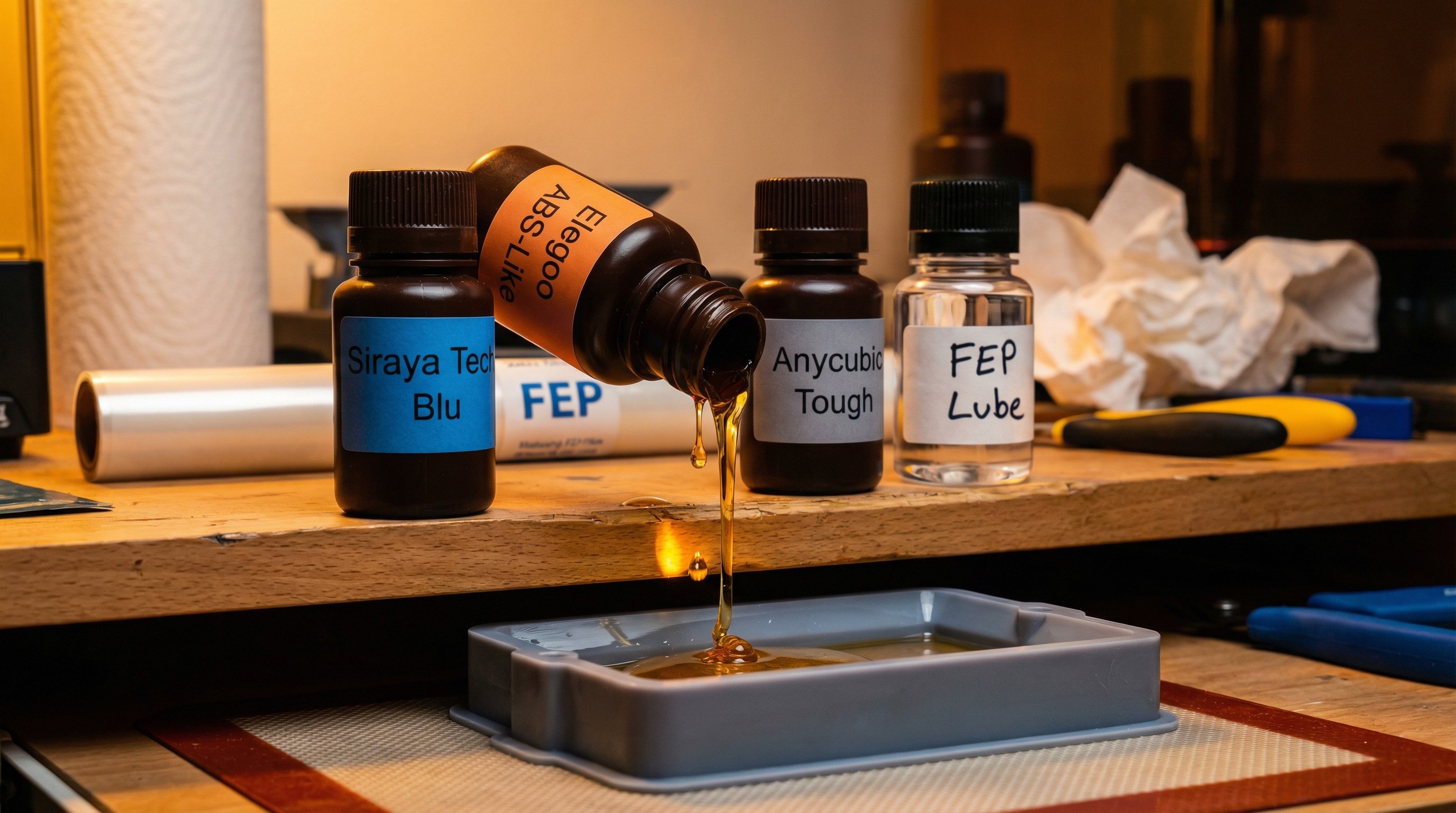
Best Overall: Siraya Tech Blu
Siraya Tech Blu is the community’s most consistent recommendation for tabletop miniatures, and it’s earned that reputation. It’s an ABS-like resin with notable toughness — significantly better impact resistance than most ABS-like competitors, while maintaining excellent surface detail.
The color is a medium grey-blue that’s genuinely useful for painting prep — shows detail clearly, photographs well, doesn’t require any particular primer color.
What’s notable about Blu:
- Flexes before fracturing — thin spear shafts survive being dropped
- Very low odor for an uncured resin (still wear gloves; still ventilate)
- Consistent results across a wide range of exposure settings — more forgiving of dialing in a new printer
- Compatible with standard IPA wash process
Approximate cost: $28–$35/liter. Siraya Tech has its own affiliate program for direct purchases.
Best for: The default recommendation for DnD/tabletop minis that will see table use.
Best Budget ABS-Like: Elegoo ABS-Like Pro
If Siraya Tech is harder to source locally or you prefer to bundle resin with your printer purchase, Elegoo ABS-Like Pro is the alternative. It’s not as tough as Siraya Tech Blu, but it’s a significant step up from standard resin on brittleness and is priced very competitively (typically $20–$28/liter, available through Elegoo directly and Amazon).
Print quality is good — clean detail on 28–32mm models, consistent curing across the standard exposure range. The “Pro” version prints faster than the original Elegoo ABS-Like at equivalent quality.
Best for: Elegoo printer owners who want ABS-like durability without changing suppliers.
Best for Fine Detail: Anycubic Standard Resin
When you’re printing a display piece — a character model for a painting competition, a showcase piece that will never be played with — Anycubic’s standard plant-based resin delivers excellent detail at a low price point (typically $18–$25/liter).
This is not a play resin. Thin features break. Impact from a normal table height drop risks fracture. For display and painting, it’s excellent. For play, use something tougher.
Best for: Display pieces, painting practice models, large terrain that won’t be handled.
Best Water-Washable Option: Phrozen Aqua 4K
If water-washable is what you want, Phrozen Aqua 4K is the option with the best combination of print quality and durability within the water-washable category. It’s not as tough as Siraya Blu — nothing in this category is — but it handles better than most water-washable competitors.
Approximate cost: $30–$40/liter.
Best for: Beginners who prefer water cleanup; display pieces and terrain for water-washable users.
Comparison Table
| Resin | Type | Toughness | Detail | Cost/Liter | Best Use |
|---|---|---|---|---|---|
| Siraya Tech Blu | ABS-Like | Excellent | Very Good | $28–$35 | Play minis — recommended default |
| Elegoo ABS-Like Pro | ABS-Like | Good | Good | $20–$28 | Play minis — budget pick |
| Anycubic Standard | Standard | Poor | Excellent | $18–$25 | Display pieces only |
| Phrozen Aqua 4K | Water-Washable | Fair | Good | $30–$40 | Beginners, display pieces |
The Play vs. Display Question
The single most important factor in resin selection is honest self-assessment of what your minis will actually experience.
Display-only minis (live on a shelf, get painted carefully, never played) can use standard resin for maximum detail. The brittleness doesn’t matter if nothing ever touches them.
Play minis (get picked up every session, travel in a case, survive contact with a table) need ABS-like resin. The detail difference at 28–32mm is not visible enough to justify the repair headaches of standard resin.
Terrain is a middle case. Large terrain pieces that sit on the table and don’t move can use standard resin. Scatter terrain and small pieces that get repositioned mid-session benefit from ABS-like.
If you’re buying a single resin to start with: buy ABS-like. The detail is good enough, the durability is substantially better, and you won’t regret it the first time a goblin gets dropped.
Technical Notes for Resin Beginners
All resins require calibration. Even after choosing the right resin, you’ll need to dial in exposure settings for your specific printer and light source. Manufacturer-recommended settings are starting points, not final answers. Run a calibration print (AmeraLabs town, UVtools calibration matrix) with any new resin.
Temperature matters. Resin prints poorly in cold (below 20°C/68°F). Viscosity increases, causing poor layer separation and adhesion. If printing in a cold workspace, let resin warm to room temperature before pouring. Some hobbyists use a heat mat under the vat.
Shake before pouring. Resin separates over time. Always shake the bottle for 30–60 seconds before use. A separated resin has inconsistent pigment and photo-initiator distribution, which causes uneven prints.
Don’t mix brands in the vat. Different resins have different photo-initiator concentrations and exposure requirements. Mixing brands in the vat leads to unpredictable exposure behavior. Drain and filter before switching resins.
How Much Resin Do You Need?
A 28mm character mini (solid, not hollowed) uses approximately 5–15ml of resin. At that rate, a 500ml bottle yields somewhere between 33 and 100 character minis, depending on model complexity and whether you hollow.
For new hobbyists: start with a 500ml bottle of your chosen resin. It’ll last long enough to calibrate your printer and learn your preferred settings, and you won’t have committed to a liter of a resin you don’t like.
For regular printers: 1-liter bottles are the standard buy. Running a busy print schedule (several prints per week), expect to go through 1–2 liters per month.
For a full cost-per-print breakdown, see how much resin does a miniature use.
Frequently Asked Questions
Can I use the resin from any manufacturer in any printer? Yes. Resins are not printer-specific. Any 405nm UV resin works in any 405nm MSLA printer. You will need to adjust exposure settings for each new resin brand.
Does resin color affect detail quality? Color affects visibility of detail but not actual print quality. Grey is easiest to see detail in and photograph. Clear resins hide surface texture. Pigmented resins (red, green, black) behave the same as grey with proper exposure settings.
How should I store unused resin? In its original dark bottle, sealed, away from UV light sources. Most resins are good for 12+ months stored correctly. Warm temperatures accelerate degradation — store in a cool, dark place. Shake before each use.
Is there a difference between resin brands at the same price point? Yes, meaningfully. At the $20–$30/liter range, Siraya Tech and Elegoo produce noticeably better consistency than off-brand resins. Cheap no-name resins have higher variance in quality, require more exposure calibration, and are more prone to print failures.
Do I need different resin for different printer brands? No. Any 405nm resin works in any 405nm printer. Exposure settings will differ between printers, but the resin itself is compatible. The beginner’s guide has the full calibration workflow.